Sedation Options
Anesthesia
Anesthesia
Several methods of anesthesia are available. The method of anesthesia that is chosen for or by a patient depends upon the nature of the surgical procedure and the patient’s level of apprehension. The following table illustrates the choices of anesthesia, a description of the anesthetic technique, and the usual indications for that technique.
Local Anesthesia
Nitrous Oxide Sedation
PO Conscious Sedation
IV Sedation
Twilight
What is Intravenous Sedation ?
Intravenous sedation or “IV sedation” (twilight sedation) is designed to better enable you to undergo your dental procedures while you are very relaxed; it will enable you to tolerate as well as not remember those procedures that may be very uncomfortable for you. IV sedation will essentially help alleviate the anxiety associated with your treatment. You may not always be asleep but you will be comfortable, calm and relaxed, drifting in and out of sleep – a “twilight sleep”.
If you choose the option of intravenous sedation your IV sedation/anesthesia is administered and monitored by our doctors therefore eliminating the costly expense of having your treatment carried out in an operating room or same day surgical facility.
Sedation
How is the IV Sedation Administered?
A small needle will be introduced into a vein in your arm or hand. The needle will be attached to an intravenous tube through which medication will be given to help you relax and feel comfortable. Once again some patients may be asleep while others will slip in and out of sleep. Some patients with medical conditions and/or on specific drug regimens may only be lightly sedated and may not sleep at all.
The goal of IV sedation is to use as little medication as possible to get the treatment completed. It is very safe, much safer than oral sedation. With IV sedation a constant “drip” is maintained via the intravenous tube.
Nitrous
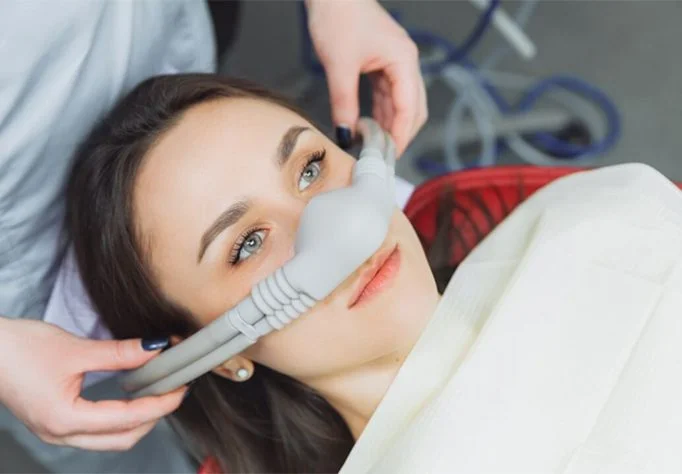
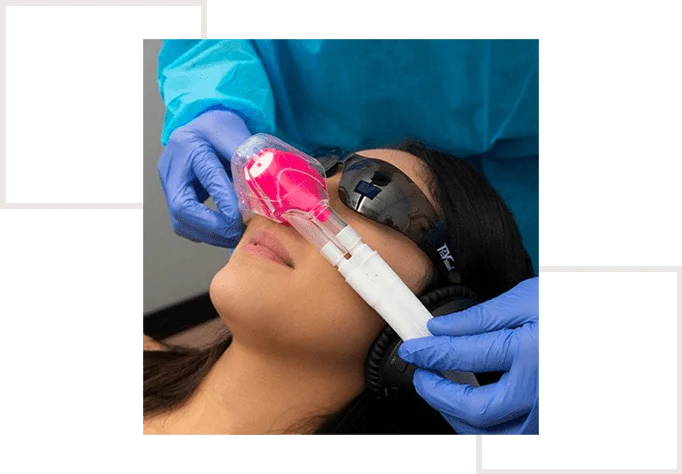
What is Nitrous Oxide (Laughing Gas) Sedation ?
Nitrous Oxide is a sweet smelling, non irritating, colorless gas which you can breathe. Nitrous Oxide has been the primary means of sedation in dentistry for many years. Nitrous oxide is safe; the patient receives 50-70% oxygen with no less than 30% nitrous oxide. Patients are able to breathe on their own and remain in control of all bodily functions. The patient may experience mild amnesia and may fall asleep not remembering all of what happened during their appointment.
Advantages to using Nitrous Oxide
- The depth of sedation can be altered at any time to increase or decrease sedation.
- There is no after effect such as a “hangover”.
- Inhalation sedation is safe with no side effects on your heart and lungs, etc.
- Inhalation sedation is very effective in minimizing gagging.
- It works rapidly as it reaches the brain within 20 seconds. In as few as 2-3 minutes its relaxation and pain killing properties develop.
Reasons to NOT use Nitrous Oxide
Though there are no major contraindications to using nitrous oxide, you may not want to use it if you have emphysema, Multiple Sclerosis, or Vitamin B 12 deficiency., a cold or other difficulties with breathing. You may want to ask your dentist for a “5 minute trial” to see how you feel with this type of sedation method before proceeding.
Sedation
What is PO Conscious Sedation
Non Enteral Conscious sedation is when we prescribe an oral benzodiazepine for the patient to take the morning of surgery on an empty stomach. It may cause you to feel sleepy, and have amnesia – thus the consent must be signed prior to the day of surgery. Often times we will combine this sedation method with nitrous oxide to synergistically deepen the level of sedation.
Request an Appointment
Appointment
Hours of Operation
Monday:
7:30AM - 4:00PM
Tuesday:
7:30AM - 4:00PM
Wednesday:
7:30AM - 4:00PM
Thursday:
7:30AM - 4:00PM
Friday:
7:30AM - 4:00PM
Saturday:
By Appointment
Sunday:
Closed
Monday - Friday:
7:30AM - 4:00PM
Saturday:
By Appointment
Sunday:
Closed